
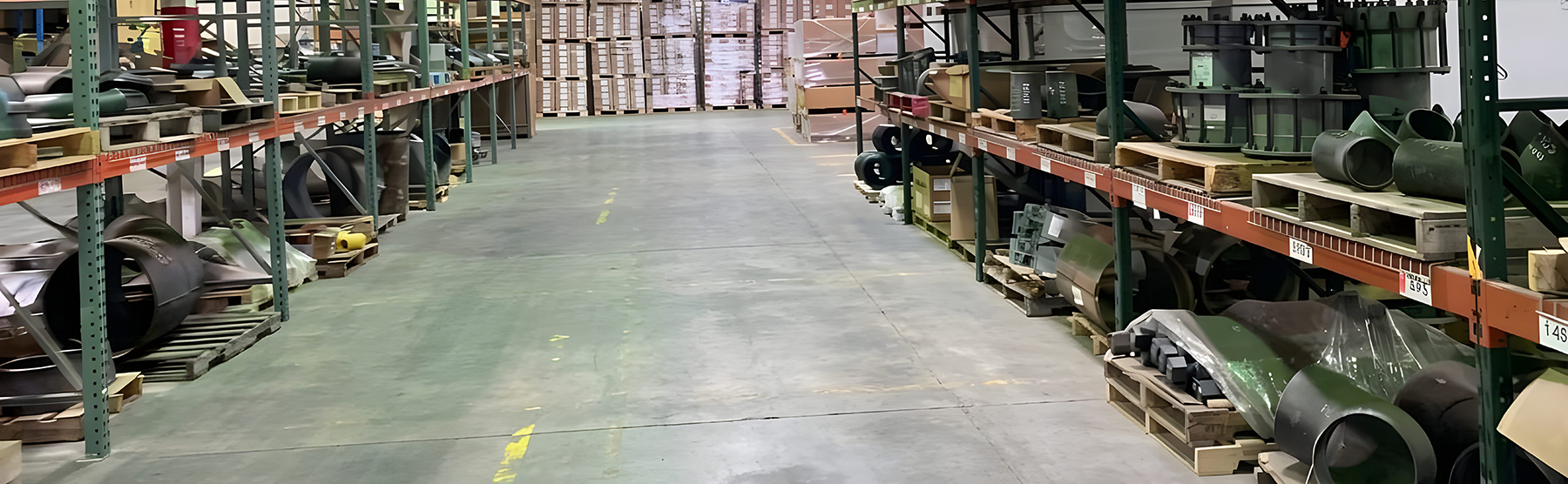
Not all warehouse space is designed for the same kind of material. For some companies, warehousing may simply mean finding room to store finished goods until they are ready to ship. But for manufacturers and distributors handling industrial goods, warehousing requires a more flexible and operationally thoughtful approach.
Industrial warehousing is focused on more than square footage. It requires a deep understanding of how material moves, how it needs to be stored, and what role the warehouse plays in keeping the client’s operation running. Below are 7 key factors that make industrial warehousing different than standard storage.
1. Product Profile: Know What’s Actually Being Stored
Industrial goods have more varied storage needs than standard consumer products. Heavy pallets, oversized materials, raw inputs, paper rolls, packaged chemicals, and production components all have different requirements for handling and storage. Because of that variety, the product profile should guide the handling and storage approach.
Bottom Line: The warehouse needs to account for size, weight, packaging, movement frequency, and how the product will be accessed.
2. Storage Configuration: Flexibility Over One-Size Fits All
Typical warehouse storage relies on standard layouts. Industrial warehousing requires a more flexible mix of storage options.
Some material belongs in racking. Other goods require floor storage, bulk storage, dedicated staging areas, or segregated zones. The right configuration depends on how material is received, how frequently it moves, and how it ships.
Bottom Line: A strong industrial warehousing partner builds the storage setup around the material.
3. Space Planning: It’s Not How Much but How Well
Available square footage is just the starting point. What matters most is how that space is organized and used. Industrial inventory may need to be grouped by SKU, client, project, lot, production schedule, destination, or shipping frequency. Fast-moving goods need to be readily accessible. Long-term storage needs to stay organized without consuming prime floor space.
Bottom Line: Effective space planning keeps inventory organized and accessible, reduces handling time, and aligns with the client’s operation.
4. Inventory Flow: Storage Is Only One Part of the Picture
Industrial warehousing often involves multiple steps beyond receiving and storage. Materials might arrive by the truckload and ship out in smaller quantities. Goods from multiple suppliers might need to be consolidated, staged, and distributed to customers, facilities, or job sites within tight timeframe. A strong warehousing partner understands the full arc of inventory movement.
Bottom Line: Understanding inventory flow is essential. A warehouse partner needs to build processes to support how client material moves from inbound receiving through outbound delivery.
5. Inventory Visibility: Knowing What’s Stored at Any Given Time Is Critical
When product enters a third-party warehouse, visibility becomes critical. Clients need accurate, real-time information on what’s been received, what has shipped, and what remains available. A warehouse management system (WMS) with client-facing access makes this possible.
Bottom Line: For industrial companies, accurate inventory visibility supports production planning, project timelines, customer requirements, and distribution decisions.
6. Operational Flexibility: Needs Won’t Remain Static
Industrial warehousing needs can change quickly. A company may need overflow storage during a production increase, temporary space for a project, additional capacity for seasonal demand, or long-term outsourced warehousing support. In other cases, a business may need to scale space up without committing to additional owned or leased facilities. Or they might have to scale down without having to pay for space they are not using.
Bottom Line: The right warehousing partner can scale with clients up or down as conditions change, giving clients room to adapt without locking them into fixed infrastructure.
7. Supply Chain Support: More Than Storage Space
Industrial warehousing is an active part of the supply chain and can support receiving, inventory management, order fulfillment, kitting, light assembly, cross-docking, consolidation, outbound shipping, or transportation coordination.
Bottom Line: The right partner understands how warehousing supports the broader operation and positions the warehouse as an extension of the client’s manufacturing, distribution, or project management.
Industrial Warehousing Requires a More Customized Approach
Industrial warehousing is different because industrial products often require a more customized approach to space, layout, inventory management, and movement. It offers flexibility, visibility, and support geared to meet the needs of manufacturers and distributors of industrial goods. The companies that get the most out of outsourced industrial warehousing work with a partner who understands their material, their operation, and their supply chain.
Working with a 3PL Warehouse Provider
Do you need to find a 3PL to handle your industrial warehousing? We'd be happy to discuss your needs.